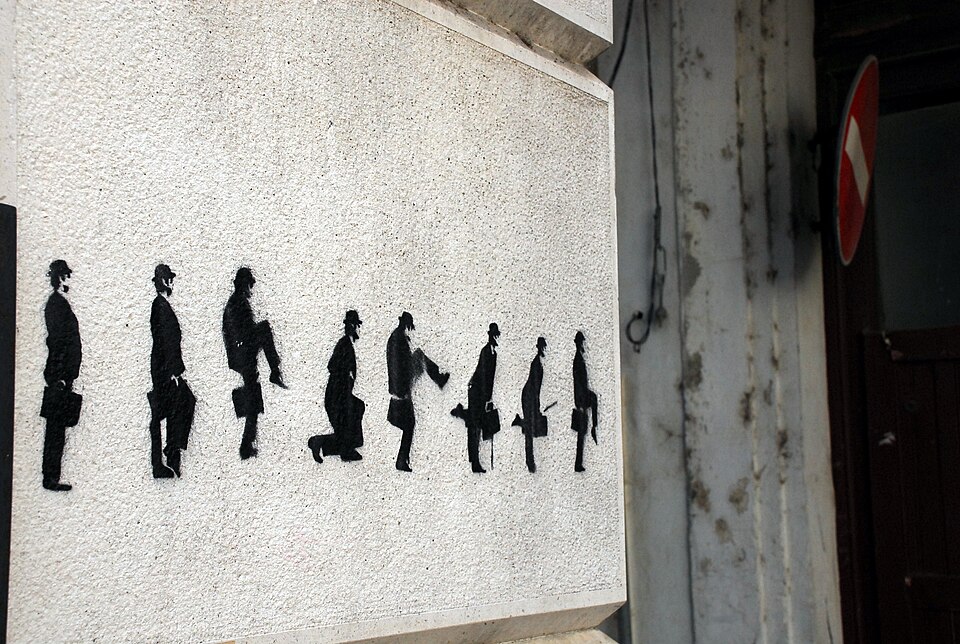
Photo: Wegmann, Street art silly walk (Porto, Portugal), CC BY-SA 3.0, via Wikimedia Commons
1A sketch everybody knows
The Ministry of Silly Walks was first shown on BBC television in 1970, in Monty Python's Flying Circus. More than fifty years later, it is still one of the most famous comedy sketches in Britain: ask a British person about it, and they will probably try to do the walk! Remember Blake's parents: they “instantly knew what it was”.
The silly walk has become a symbol of British humour all over the world. You can find it in street art, on T-shirts, in advertisements, and fans sometimes organise silly walk parades.
2The characters
Mr Teabag (John Cleese) is a civil servant: he works for the government. He wears the “uniform” of the London civil servant of the time: a bowler hat, a dark suit, an attaché case and a newspaper. He is very serious, very polite… and his walk is completely crazy.
Mr Putey (Michael Palin) is shy and nervous. He wants a grant, but his walk is not silly enough. And the secretary is called Mrs Two-Lumps, like the sugar in a cup of tea!
3Absurd humour
Absurd humour takes a completely impossible idea — a government ministry for silly walks — and treats it with perfect logic and total seriousness. The civil servant analyses the walk like an expert (“the right leg isn't silly at all”), talks about budgets and compares Silly Walks with National Defence.
The characters never laugh: that's called deadpan humour. The contrast between the very serious form (an office, polite English, numbers) and the ridiculous content is what makes us laugh.
Is there a message? Perhaps: the sketch makes fun of bureaucracy and of the way governments spend money. But the Monty Python also loved being silly just for fun.