1Lewis and Clark at Three Forks
Drag each label onto the right number (or tap a label, then a number).Glissez chaque étiquette sur le bon numéro (ou touchez une étiquette, puis un numéro).
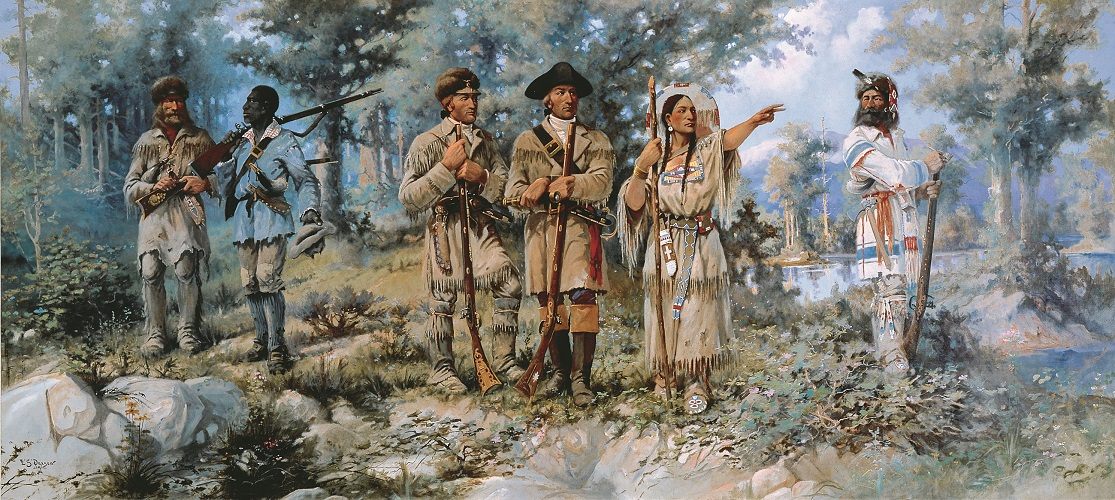
Edgar S. Paxson, 1912, Montana State Capitol. Public domain, via Wikimedia Commons

Well done! Paxson painted this scene in 1912, more than a hundred years after the expedition.Bravo ! Paxson a peint cette scène en 1912, plus de cent ans après l'expédition.
2Lewis and Clark on the Lower Columbia
Drag each label onto the right number (or tap a label, then a number).Glissez chaque étiquette sur le bon numéro (ou touchez une étiquette, puis un numéro).
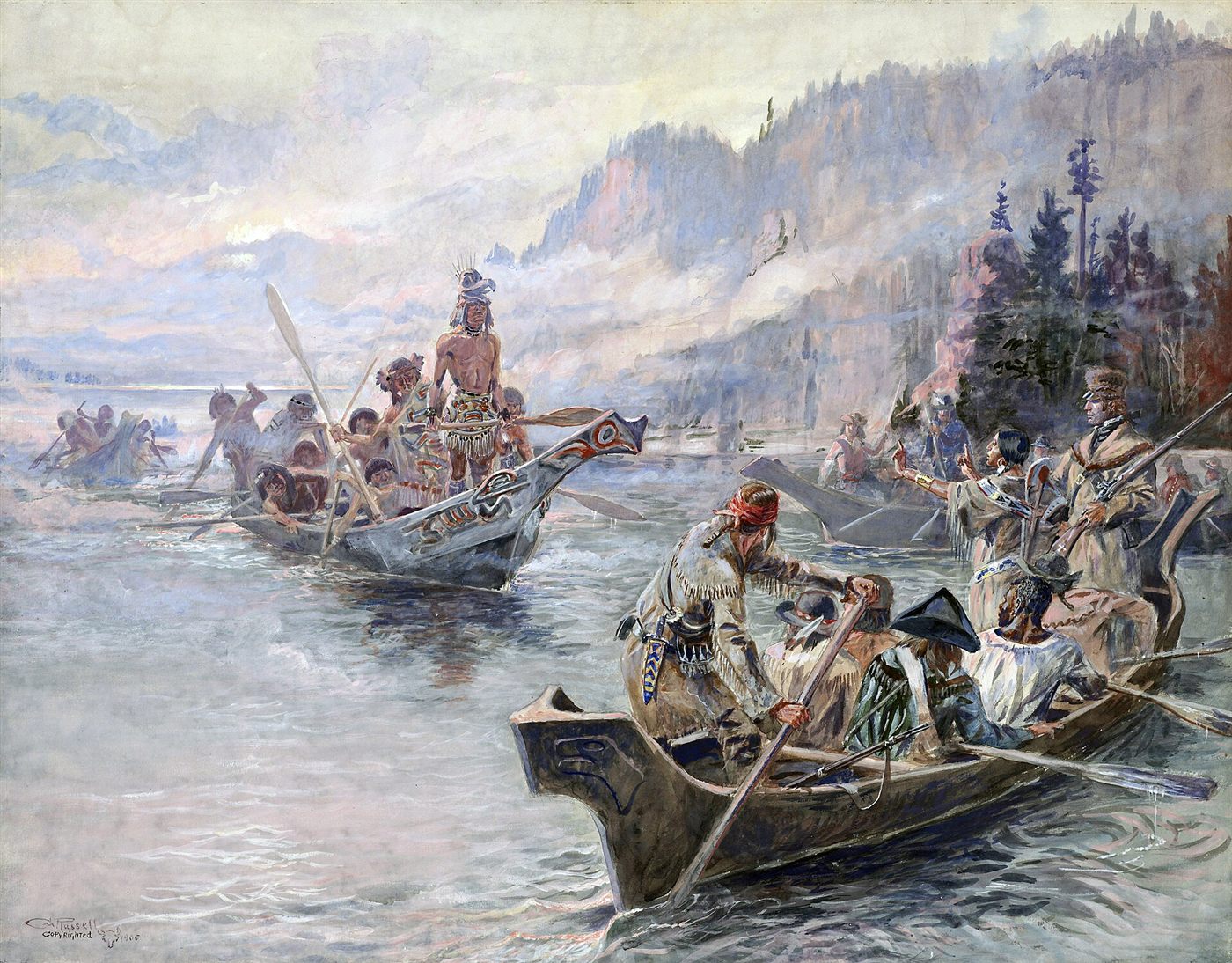
Charles M. Russell, 1905, Amon Carter Museum of American Art. Public domain, via Wikimedia Commons

Well done! The expedition reached the Pacific in November 1805, a year and a half after they set off.Bravo ! L'expédition a atteint le Pacifique en novembre 1805, un an et demi après le départ.
3Captain William Clark meeting the Indians of the Northwest
Drag each label onto the right number (or tap a label, then a number).Glissez chaque étiquette sur le bon numéro (ou touchez une étiquette, puis un numéro).
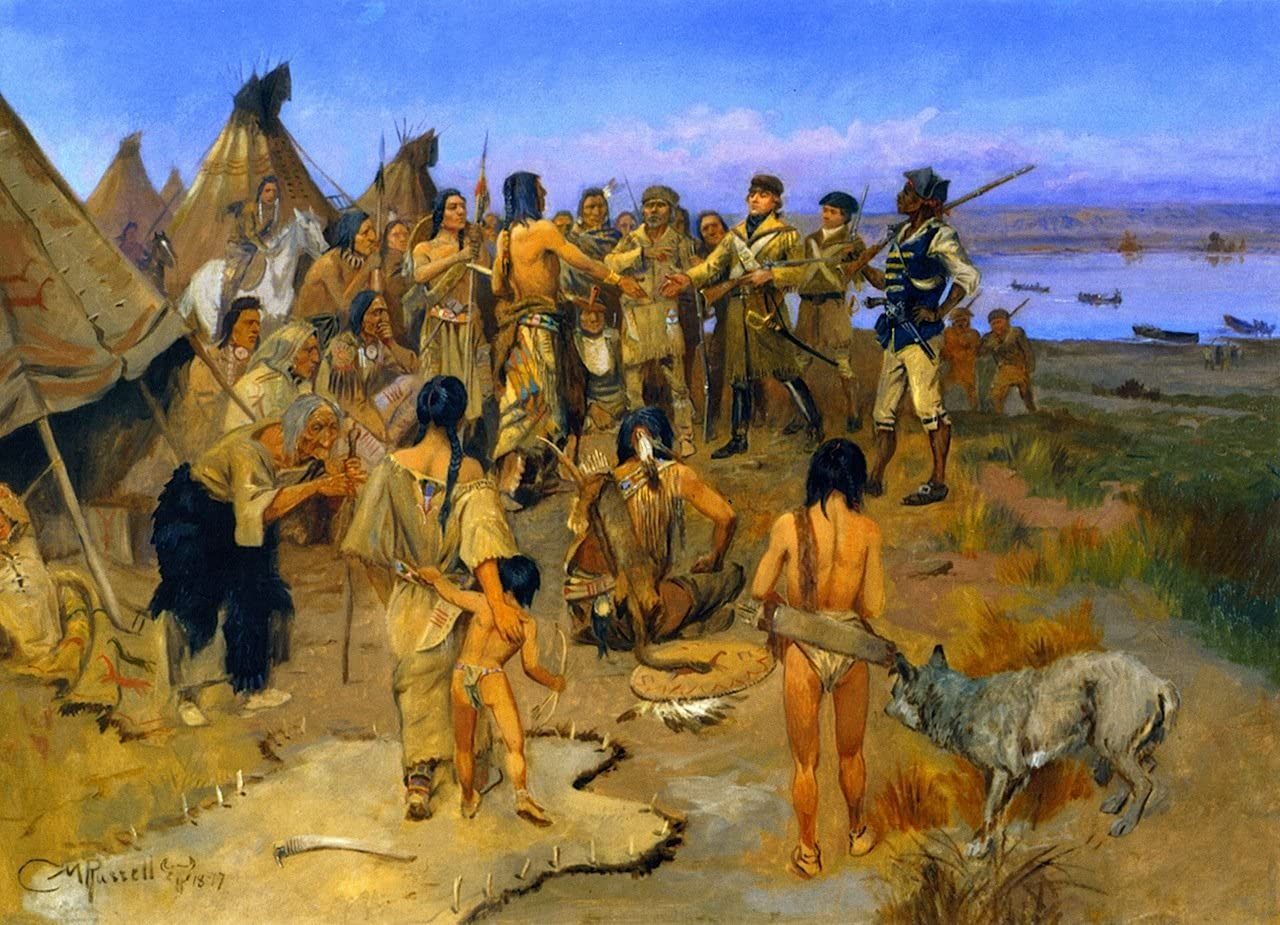
Charles M. Russell, 1897 (first called Lewis and Clark Meeting the Mandan Indians), Sid Richardson Museum. Public domain, via Wikimedia Commons

Well done! Even the museum is not sure which meeting Russell wanted to paint.Bravo ! Même le musée ne sait pas exactement quelle rencontre Russell a voulu peindre.
4Lewis and Clark Reach Shoshone Camp Led by Sacajawea
Drag each label onto the right number (or tap a label, then a number).Glissez chaque étiquette sur le bon numéro (ou touchez une étiquette, puis un numéro).
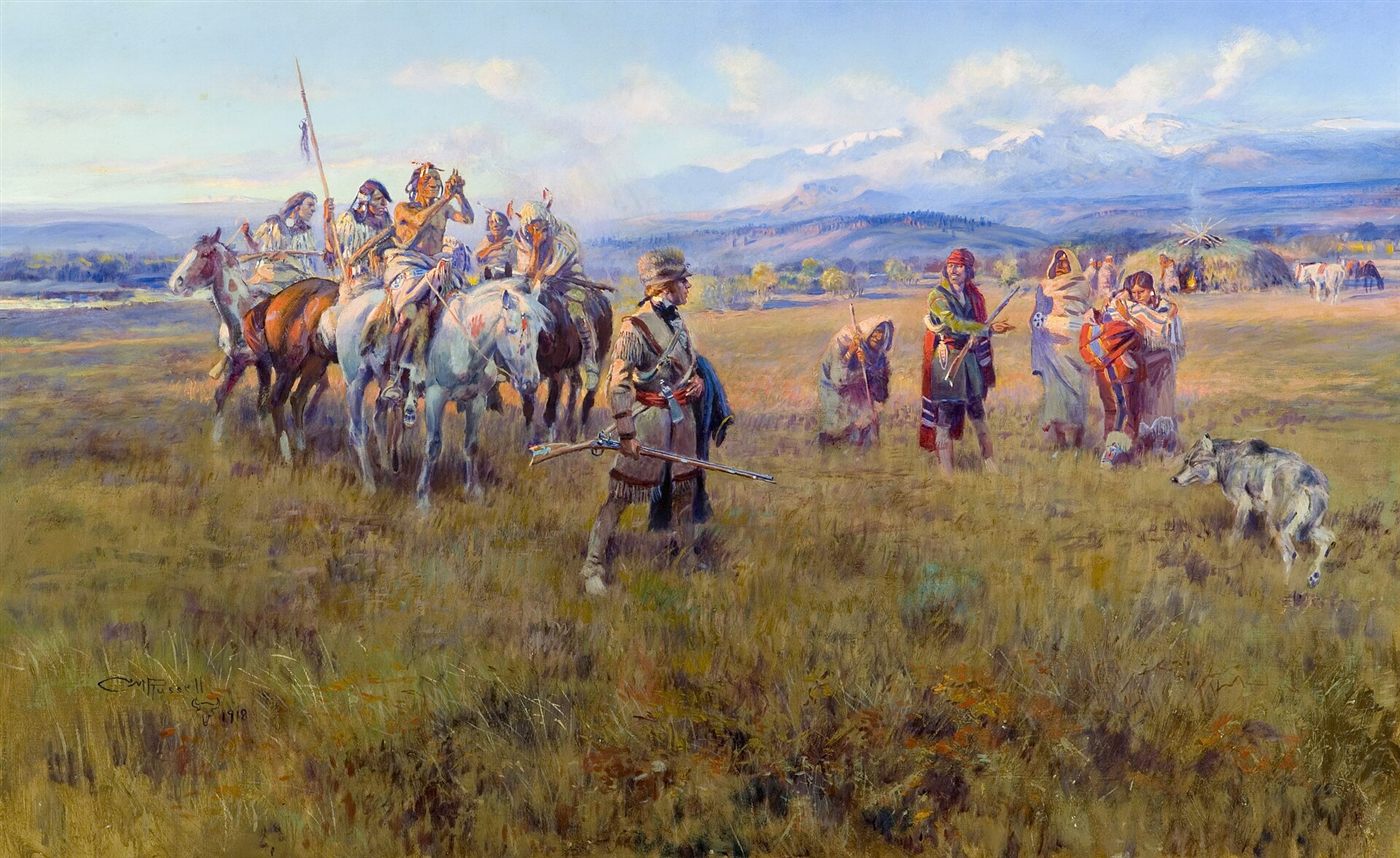
Charles M. Russell, 1918, Gilcrease Museum. Public domain, via Wikimedia Commons

Well done! Surprise: the Shoshone chief, Cameahwait, was Sacagawea's brother! She had not seen him since she was a child.Bravo ! Surprise : le chef shoshone, Cameahwait, était le frère de Sacagawea ! Elle ne l'avait pas revu depuis son enfance.
5Then, or a century later?À l'époque, ou un siècle plus tard ?
Some pictures were made by members of the expedition, or just after it. Others were painted about a hundred years later. Which is which?Certaines images ont été faites par des membres de l'expédition, ou juste après. D'autres ont été peintes environ cent ans plus tard. Lesquelles ?
Only the black and white pictures are from the time of the expedition. The colour paintings are a romantic vision of the West, painted a century later: everybody looks brave and proud, and some details are wrong, like the tipis of the Mandan!Seules les images en noir et blanc datent de l'époque de l'expédition. Les tableaux en couleurs sont une vision romantique de l'Ouest, peinte un siècle plus tard : tout le monde y a l'air courageux et fier, et certains détails sont faux, comme les tipis des Mandan !
6Your turn: guess the paintingÀ vous : devinez le tableau
Work in pairs. Choose one painting, but don't say which one! Describe it to your partner: he or she guesses the painting.Travaillez à deux. Choisissez un tableau sans dire lequel ! Décrivez-le à votre partenaire, en anglais : il ou elle doit deviner le tableau.
- Say who is in the painting and what they are doing.Dites qui est sur le tableau et ce que font les personnages.
- Describe the foreground and the background.Décrivez le premier plan et l'arrière-plan.
- Give your opinion: is it a true picture of the expedition?Donnez votre avis : est-ce une image fidèle de l'expédition ?
Useful sentences
In the foreground, there is a woman. She is pointing at something.
On the left, I can see two men with rifles.
In the background, there are mountains / there is a river.
They are standing / sitting / paddling / shaking hands.
I think it's a romantic picture, because everybody looks brave and proud.
It was painted about a hundred years after the expedition.
More about Lewis and Clark: The expedition in short · Almanac: a page of history · Without Sacagawea's help... · The whole story: fact or fiction?